A tire blowout can happen in seconds, and the sudden noise may cause a driver to panic. The safest response starts with keeping control of the vehicle instead of reacting too quickly. Hard braking, sharp steering, or a sudden lane change can make the car harder to control at highway speed. Your first goal should be to hold the steering wheel steady, allow the vehicle to slow down, and reach a safer place away from moving traffic. Once stopped, you can inspect the tire and decide whether a spare can be used or roadside help is needed. This blog explains what to do after a tire blowout on the highway, including safe stopping steps, tire checks, spare use, roadside precautions, and signs that towing may be necessary.
Keep The Vehicle Stable During The First Seconds
A blowout often creates a loud bang followed by vibration, pulling, or repeated thumping. The damaged tire may make the steering feel heavier on one side. Your first job is to keep the vehicle moving in a predictable direction.
Avoid making sudden movements. Instead:
- Hold the steering wheel firmly with both hands.
- Keep the vehicle pointed straight within your lane.
- Take your foot off the accelerator gradually.
- Avoid pressing the brake pedal hard.
- Make small steering corrections if the vehicle pulls.
- Check mirrors before changing lanes.
- Turn on your hazard lights when you can safely do so.
Hard braking transfers vehicle weight toward the front tires. If a front tire has failed, that sudden weight shift can make steering harder.
Find A Safer Place Before Stopping Completely
Do not stop in a traffic lane unless the vehicle cannot continue safely. If steering remains manageable, reduce your speed and look for a wider location.
Good stopping choices may include:
- A wide highway shoulder
- A nearby exit
- A rest area
- A level parking area
- A paved roadside pull-off
Try to avoid:
- Sharp curves
- Hill crests
- Narrow shoulders
- Soft dirt
- Deep gravel
- Steep slopes
- Areas directly beside fast-moving traffic
Once stopped, place an automatic transmission in Park. For a manual vehicle, leave it in gear. Set the parking brake firmly. Try to position the damaged tire away from the active traffic lane when possible. A jack needs firm, level ground. Soft soil can allow the jack to sink or tilt under vehicle weight. Even a small shift can make a roadside tire change unsafe. If the shoulder is narrow or traffic is passing close to your vehicle, remain inside and request roadside help.
Make Your Vehicle Easier For Drivers To See
Visibility becomes especially important at night, during rain, or when the vehicle sits close to traffic. Keep your hazard lights running once you are safely stopped. Before opening any door, check your mirrors and look behind you. If possible, passengers should leave through the side facing away from traffic.
Use these roadside precautions:
- Keep children close to a responsible adult.
- Keep pets secured inside the vehicle or on a leash.
- Stand behind a guardrail when one is available.
- Avoid standing directly behind your vehicle.
- Do not work with your body facing moving traffic.
- Use a flashlight at night.
- Wear a reflective vest if one is available.
Warning triangles can make a stopped vehicle easier to notice. Only place them when you can do so without walking into traffic.
Inspect The Failed Tire And Nearby Components
A tire blowout can cause more damage than a simple loss of air. Pieces of rubber may strike the wheel well, bumper, brake lines, or nearby body panels.
Without crawling beneath the vehicle, check for visible signs such as:
- Torn tire sidewalls
- Exposed steel cords
- Missing pieces of tread
- A bent wheel
- A wheel sitting at an unusual angle
- Loose wheel-well material
- Fluid beneath the vehicle
- Damage around the suspension area
Do not continue driving normally on a tire that has lost all air. Driving on a flat tire can damage the wheel because the metal rim begins carrying loads the inflated tire normally supports.
Also check your other tires if possible. Underinflation is a common source of excess tire heat. Many U.S. tire-pressure monitoring systems are designed to warn drivers when pressure drops about 25% below the recommended cold inflation pressure.
Check Whether Your Spare Tire Can Be Used
Many drivers do not inspect their spare until they actually need it. Before removing the damaged wheel, confirm that the spare is present and usable.
Check:
- Tire pressure
- Sidewall condition
- Visible cracks
- Tread condition
- Correct wheel size
- Spare-tire speed limits
- Spare-tire distance limits
Many compact temporary spares require around 60 PSI, although your tire label or owner’s manual should always control the decision. Temporary spare tires commonly carry a maximum speed near 50 mph, but limits vary by vehicle and tire. Check the information printed directly on the spare.
Some vehicles no longer include a spare tire. Instead, they may carry:
- Tire sealant
- A small air compressor
- A tire repair kit
- Run-flat tires
Sealant kits have limits. They generally cannot repair major sidewall tears, large holes, or a tire that has separated during a blowout. If the spare is damaged, flat, or missing, roadside assistance or towing may be required.
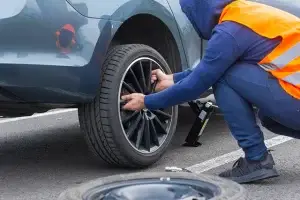
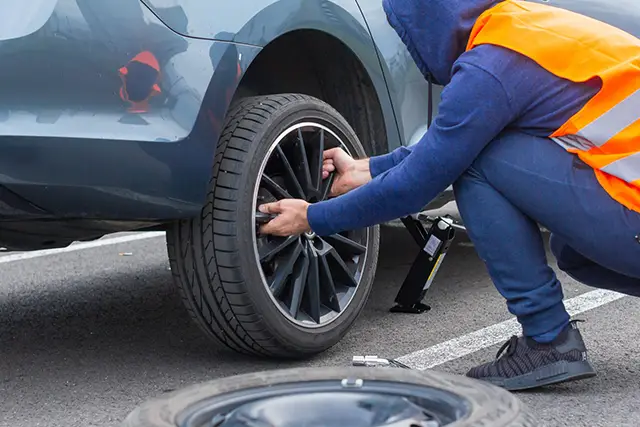
Change The Tire Only Under Safe Conditions
Before changing a tire, check your surroundings again. Highway traffic can make an otherwise simple tire change dangerous.
Use only the lifting point listed in your owner’s manual. Modern vehicles have specific reinforced areas designed to support a jack.
A basic tire-change sequence includes:
- Set the parking brake.
- Place the vehicle in Park or in gear.
- Remove the wheel cover if necessary.
- Loosen lug nuts slightly before lifting.
- Position the jack at the approved point.
- Raise the tire clear of the ground.
- Remove the lug nuts.
- Remove the damaged wheel.
- Install the spare tire.
- Thread lug nuts by hand.
- Lower the vehicle carefully.
- Tighten the nuts in a crisscross pattern.
Many passenger vehicles use lug-nut torque somewhere around 80 to 100 lb-ft, but specifications vary greatly. Check the owner’s manual for the correct figure. A torque wrench should be used when possible to confirm proper tightening after installation.
Know When Roadside Towing Makes More Sense
Some blowouts cause enough damage that replacing one tire will not get the vehicle moving safely.
Consider towing if:
- Two or more tires are damaged.
- The wheel is cracked or badly bent.
- The spare tire cannot be used.
- Steering feels abnormal after the blowout.
- Suspension parts appear damaged.
- Fluid is leaking.
- The vehicle cannot reach a safe tire-change location.
- Traffic conditions make roadside work dangerous.
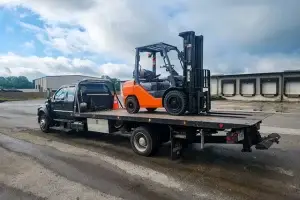
All-wheel-drive vehicles may have specific transport requirements because turning some wheels while others remain stationary can affect drivetrain components. Electric vehicles can also have manufacturer-specific towing instructions, lift points, and restrictions. A flatbed may be required for certain vehicles, depending on the drivetrain and manufacturer instructions.
When calling for help, provide:
- Your highway and direction of travel
- Nearest exit or mile marker
- Vehicle make and model
- Which tire failed
- Whether you have a spare
- Any visible wheel or body damage
These details help the towing provider prepare before arriving.
Reduce The Chance Of Another Highway Blowout
Tires need regular checks because a problem can develop long before a blowout happens. Check tire pressure when the tires are cold, ideally before driving or after the vehicle has been parked for several hours.
Pay attention to:
- Pressure: Follow the driver’s door label.
- Tread: Check for low or uneven tread.
- Sidewalls: Look for cracks, cuts, and bulges.
- Age: Check the tire’s DOT date code.
- Wear pattern: Uneven wear may point to alignment or suspension issues.
- Objects: Look for nails, screws, or other punctures.
In the United States, 2/32 inch is commonly used as the minimum legal tread depth for passenger tires. Wet-road grip can begin falling before tread reaches that limit, so tires should be inspected earlier.
Final Thoughts
A tire blowout becomes easier to manage when you focus on control, location, and safety in that order. Keep the steering steady, slow down gradually, reach a safer stopping place, and inspect the damage before attempting a repair. Avoid changing a tire beside fast-moving traffic when the shoulder is narrow or unsafe. If the wheel, suspension, or tire damage prevents continued driving, towing may be the right next step. Call Rush Hour Towing & Recovery Inc. at (423) 275-7215 today for quick vehicle support.