A roadside emergency can turn a normal drive into a serious problem within minutes. Some vehicle issues may allow you to stop, inspect the situation, and decide what to do next. Other problems make continued driving unsafe because the vehicle can no longer steer, stop, cool, or support its weight correctly. This is where emergency towing services become important. Towing keeps damaged parts from working under road load and gives the vehicle a safer way to reach a repair location. Modern cars depend on hydraulic pressure, electrical controls, cooling systems, suspension geometry, and tire structure. A fault in any of these areas can affect basic vehicle control. The blog below explain when immediate towing becomes the sensible response and why continuing to drive can lead to further damage.
Collision Damage Can Affect More Than Body Panels
A collision can damage parts that are hidden behind the body panels. Even when the engine starts, the suspension, steering, brakes, cooling system, or wheel assembly may have taken part of the impact. These parts work together to keep the vehicle stable and moving in the correct direction. Driving after structural or mechanical damage can place more load on components that have already shifted or weakened.
A collision may affect several important parts, including:
- Tie rods that connect steering movement to the wheels
- Control arms that help hold the wheel in position
- Struts and shocks that control suspension movement
- Brake hoses that carry hydraulic pressure
- Wheel hubs that support wheel rotation
- Radiator parts that control engine temperature
- Steering knuckles that connect several suspension parts
Wheel position also matters after an impact. Three basic alignment measurements affect how a vehicle tracks on the road. Camber controls wheel tilt, toe controls the direction each tire points, and caster affects steering stability. Even a small change can place uneven pressure on the tires and suspension.
Brake Failure Can Remove Reliable Stopping Ability
A vehicle depends on controlled hydraulic pressure to slow down. When the brake system cannot create or hold that pressure, normal stopping becomes unreliable. This kind of problem should not be tested by continuing to drive. Traffic conditions can change quickly, and even a short trip may require sudden braking. Most passenger vehicles use a hydraulic braking system.
The basic process works through several connected parts:
- The brake pedal activates the master cylinder
- The master cylinder creates hydraulic pressure
- Brake fluid carries pressure through the lines
- Calipers apply pressure to the brake pads
- Brake pads press against the rotors
- Friction slows the wheels
Each part depends on the others. A damaged hose, leaking line, worn caliper, or master cylinder problem can reduce braking force. Heat is another important factor. Brake pads and rotors can reach several hundred degrees during repeated or hard braking. Too much heat can reduce friction and affect brake fluid performance. This can increase stopping distance and place more stress on the braking system.
Steering Failure Can Make Vehicle Control Unpredictable
Steering problems can affect the driver’s ability to keep the vehicle in its lane or turn safely. The steering system carries force from the steering wheel to the front wheels. If one important part fails, the amount of control available to the driver can change quickly. Vehicles commonly use hydraulic or electric steering systems.
Hydraulic setups may include:
- A power steering pump
- Fluid reservoir
- Pressure hoses
- Steering rack
- Drive belt
Electric systems use a different group of parts:
- Electric steering motor
- Torque sensor
- Steering-angle sensor
- Control module
- Electrical wiring
Many modern vehicles use a 12-volt electrical system to support steering controls and other vehicle functions. A major electrical problem can reduce steering assistance even when the engine continues to run. Mechanical steering parts also carry large forces during turns, lane changes, braking, and travel over rough pavement. Components such as tie rods, ball joints, and the steering rack must remain properly connected and aligned.
Driving speed increases the amount of force placed on these parts. A steering problem that seems manageable at very low speed may become harder to control on a normal road. Immediate towing prevents damaged steering parts from being placed under further road load.
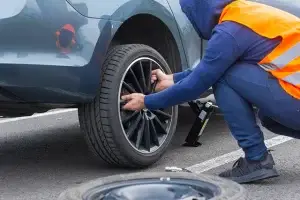
Severe Tire Damage Can Stop Safe Road Travel
Tires do much more than keep the vehicle rolling. They carry vehicle weight, maintain contact with the road, and transfer braking and steering force to the pavement. When a tire suffers major structural damage, the vehicle may no longer be able to support normal travel.
A modern tire contains several layers and parts:
- Tread that contacts the road
- Steel belts that strengthen the tread area
- Sidewalls that flex during movement
- Inner liner that helps hold air
- Bead that secures the tire to the wheel
- Body plies that support the tire structure
Each section plays a different role. A damaged sidewall cannot support normal weight in the same way as an intact tire. A broken bead can also prevent the tire from staying seated on the wheel.
Tire pressure is another important part of vehicle support. Many passenger vehicles use pressures around 30 to 35 PSI, although the correct figure depends on the vehicle. The correct pressure appears on the tire information label near the driver’s door.
Engine Overheating Can Damage Internal Engine Parts
An engine produces a large amount of heat during normal operation. The cooling system keeps that heat within a controlled range by moving coolant through the engine and radiator. When coolant stops circulating properly, engine temperature can rise quickly.
The cooling system relies on several parts working together:
- Radiator
- Water pump
- Thermostat
- Cooling fans
- Coolant hoses
- Expansion tank
- Engine coolant
The water pump moves coolant through the system, while the thermostat controls when coolant flows through the radiator. Cooling fans help remove heat when airflow is limited, such as during slow traffic. Many passenger vehicle engines operate around 195°F to 220°F after reaching normal temperature. Temperatures above the designed range can affect engine oil, seals, gaskets, and metal components.
Excess heat may lead to damage involving:
- Head gasket
- Cylinder head
- Pistons
- Engine oil
- Rubber seals
- Cooling hoses
A warped cylinder head can prevent the head gasket from sealing correctly. That may allow coolant, oil, and combustion gases to mix where they should remain separate.
Floodwater And Ditches Can Trap A Vehicle
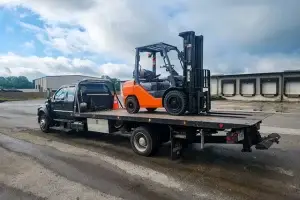
A vehicle that leaves the road can become difficult to recover because normal tire traction may no longer be available. Mud, soft shoulders, loose gravel, floodwater, and ditches can change the angle of the vehicle and place weight on parts that are not designed to support it.
When tires spin in loose ground, several things can happen:
- The tires dig deeper into the surface
- Ground contact becomes weaker
- The vehicle angle can change
- Driveline parts can become hotter
- The underbody can settle onto the ground
- One or more wheels may lose useful traction
Once the underbody touches the ground, tire grip alone may not be enough to move the vehicle. Floodwater creates a different mechanical concern. Water that reaches the engine air intake can enter the cylinders. An engine is designed to compress an air and fuel mixture, but water cannot be compressed in the same way.
If water enters a cylinder, engine movement can place extreme force on:
- Connecting rods
- Pistons
- Valves
- Cylinder walls
Vehicle recovery also depends on weight, slope, ground firmness, wheel position, and the direction of the pull. Rated recovery points must be used because suspension or exhaust parts are not designed to handle heavy pulling force.
Conclusion
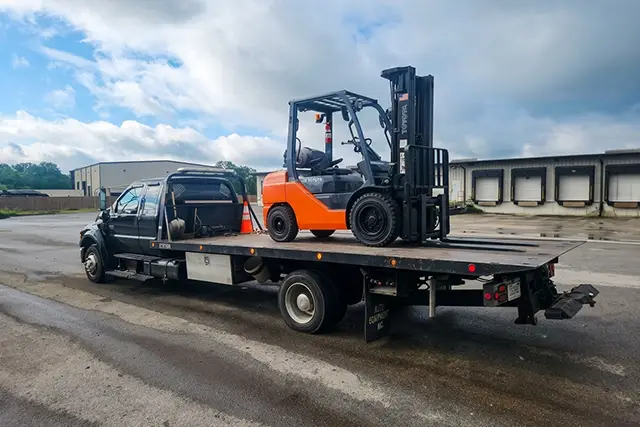
Roadside emergencies involving collisions, brake failure, steering problems, tire damage, overheating, floodwater, or ditches can leave a vehicle unable to continue safely. Driving farther can place extra load on damaged mechanical parts and turn one problem into several repairs. Stopping the trip gives those parts a chance to remain stationary until the vehicle reaches a suitable repair location. Rush Hour Towing & Recovery Inc. can help move your vehicle when roadside trouble brings your trip to a stop. Call today and get the help you need to clear the road and get your vehicle where it needs to go.